
 ESTÚDIO KENOSIS
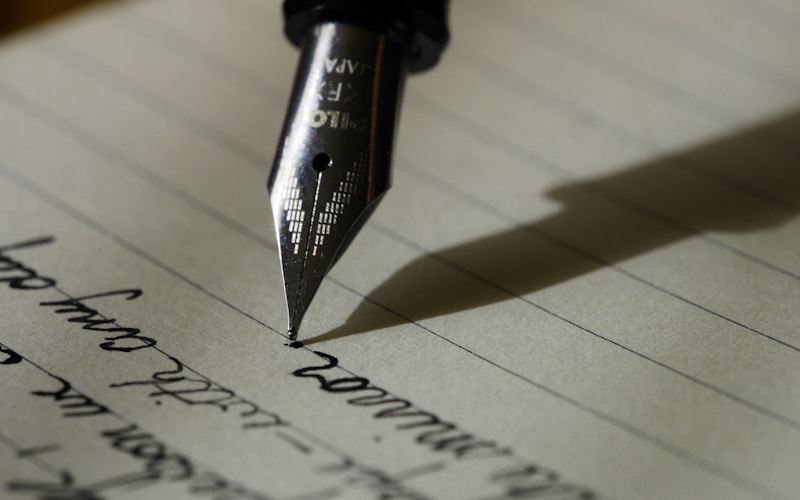
Difference between text preparation and proofreading
In the process of publishing a book, e-book, or any other print or digital material intended for a wide audience, a text goes through several stages before reaching the reader in an impeccable state. Among the most crucial—and frequently confused—phases are copyediting and proofreading.
Although both share the ultimate goal of ensuring the visual and linguistic quality of a work, they occur at different points in the editorial workflow and involve quite distinct scopes of work.
Read on to understand the role of each of these stages and why both are indispensable in the publishing industry.
1. Copyediting (Text Preparation)
Copyediting is the first in-depth intervention in a text following the acceptance of the original manuscript. It takes place while the text is still in an editable format (typically in software such as Microsoft Word), before the work moves on to graphic design and layout.
The copyeditor acts as a bridge between the author’s writing and the reader, performing the meticulous task of refining the content.
Key responsibilities of the copyeditor include:
Editorial style standardization: Applying the publisher’s style guide (e.g., conventions for writing out numbers, the use of italics, handling of foreign terms, capitalization, and the citation of titles).
Grammatical and orthographic interventions: Correcting issues related to grammatical agreement, government (verb/preposition usage), punctuation, the use of the crase (in Portuguese), and syntax.
Coherence and cohesion: Ensuring a smooth reading flow, sentence clarity, and the elimination of unintended ambiguities.
Fact-checking: Verifying dates, the names of characters or historical locations, quotations, and bibliographic references.
Tone and register adjustment: Ensuring that the level of language is appropriate for the intended target audience.
Markup for layout: Identifying the hierarchy of headings (H1, H2, H3), highlighted text, epigraphs, footnotes, and tables.
2. Proofreading
Proofreading takes place after the layout process. The proofreader works directly on the paginated proofs (in PDF format or printed on paper), analyzing the text as it appears in its final published layout.
At this stage, there is very little room for major structural changes, as any significant alteration to the text could disrupt the pagination and lead to new layout errors.
Key responsibilities of the proofreader:
Hunting for typos and residual errors: Identifying minor typing or spelling slips that went unnoticed during the preparation phase.
Layout errors: Checking for "widows" and "orphans" (isolated lines at the top or bottom of a page), incorrect word breaks (hyphenation at the end of a line), overlapping text, or truncated passages.
Verifying layout elements: Checking page numbering (pagination), headers, image captions, the table of contents, footnotes, and the index.
Fidelity to the manuscript: Ensuring that the laid-out text matches the file approved during the preparation stage.
Why should neither stage be skipped?
Relying solely on proofreading to fix structural issues can be costly: altering entire paragraphs during the layout (typesetting) phase requires redoing the pagination work, leading to schedule delays and increased production costs.
Conversely, skipping the proofreading stage after copyediting increases the risk of publishing a book that contains visual errors or flaws introduced during the layout process itself.
The complementary roles of the copyeditor and the proofreader ensure that the book reaches the public with technical rigor, clarity, and a professional standard.